
Choosing your camera
I spent most of the day outdoors enjoying springtime nature, so I am not in the mood for serious topics. I wrote something light instead.
As a long-term hobby photographer, photography was an obvious choice. I work as a professional project manager, but I have no inclination to write about photo projects. Photography is an escape from work, so I rarely plan my photo trips.
Spring is a season to buy new cameras for all those summer travels. As I often help selection decisions at work, I showed you how to choose a camera in a (quasi) professional way.
Your criteria
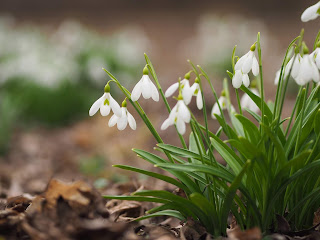
Snowdrops in Alcsút Arboretum
Alcsútdoboz, Hungary
Electronics stores offer a baffling selection of cameras with a puzzling set of features nowadays. Unprepared buyers are prone to make the wrong choice. Your first step, therefore, is knowing what you want. What do you want to use your camera for? Do you only want to take pictures of family milestones? Or preserving intimate moments, places you visit, or flowers you discover in a forest walk are likewise important? Take notes of these uses.
Your skill level is also important. Are you an occasional family photographer or a serious enthusiast? Another facet is where will you use your camera? Will you shoot only at home? Family weddings? Sports events? Your forest walks? Do you want to take it everywhere? If you appreciate travel photography, do you travel by car or low-cost flights with luggage restrictions?
Last, you need to set up a budget that you will probably exceed.
Read
The second step is to translate your user needs to the desired features. Unless you are already familiar with photographic terms, learn before you decide! Read some good photography books suiting your level and needs. Despite being around twenty years old, I still recommend the National Geographic Photography Field Guide as a start. The “From Snapshots to Great Shots” series from Peachpit Press is also a good source. For a more artistic view, The Photographer’s Eye from Michael Freeman is one of my favorites. Read photography books! It will help you discover your short and long-term needs and your relation to photography. Books will further help you understand your long-term needs. You may not be a serious enthusiast at the moment, but knowing in advance will help you figure out if you want to be. Learn in advance! It is cheaper than trials and errors.
Plans
Peace Stupa, Zalaszántó, Hungary
Be patient when you choose your camera. Consider your future needs. How much are you willing to learn? Are you willing to invest in the long run in terms of time and money? Think in systems not cameras and starter kits! You may miss that nice super-zoom capability from your first kit if you buy an interchangeable lens camera with only one kit lens. But you will have a greater potential for development.
Remember: You choose a system not a camera. You may not buy extra lenses at your first purchase, but you want to get a system that you can expand. Likewise, consider the capabilities of the whole system. Do not buy the best in class, full frame camera if you are not willing to match your choice with quality lenses later.
Research the market
Once you know what you want, start researching the market! Again: Look for systems, not cameras first. Do you intend to develop your skills later? Interchangeable lens camera systems may be for you. Do you need low light or nice, blurry backgrounds? Do you need portability? What sensor size will be your best compromise? What lenses can you get for the system of your choice? Are there quality lenses with a fast aperture? Are there good third party lenses for a more affordable price or with unique features?
Review sites like dpreview.com or cameralabs.com are great sources. Google and YouTube are also your friends. Then check prices at online stores like Adorama and B&H before you go to your favorite electronics or camera store.
What did I choose?
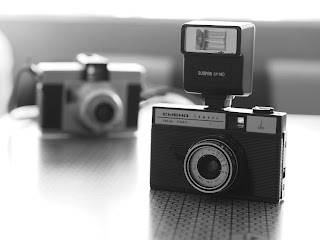
My Smena film camera from the 1980s with the roll film Certina of my parents in the background
Let me illustrate the process with my example. I am a long-term photo enthusiast starting in the 1980s with a Soviet made Smena film camera. I always wanted an SRL camera, but instead of buying one, I went digital as early as 2001. Much later, when I could buy my first serious camera, I chose a Canon DSLR for image quality and ease of use. I also purchased a 50mm f1.8 lens to the basic kit lense. It was an excellent starter kit, but it was bulky causing me to use my Canon compact when traveling. Compromising image quality for portability on my best photo opportunities was annoying, so I looked for alternatives. For me, the micro four thirds system ways the best compromise. Its sensor is smaller than ASPC or full frame but coupled with the premium fast lenses of Olympus I did not compromise in image quality or blurry backgrounds. My choice was an Olympus OM-D with premium Olympus lenses. If I could afford to make a step further, this system has a potential in high performance camera bodies and professional quality lenses.
Olympus has recently sold its camera branch, so now you find these cameras under the new brand name OM System. But characteristics, performance, and quality are the same.
One warning with OM-D cameras though: they are not for the fainthearted. To use the features OM-D cameras, you need to invest in learning. Yes, they have automatic settings, but you may not need an advanced camera if you do not want to learn. For light hobby uses, you may benefit more from their PEN line or a serious compact camera.
Prepare for changes
Think about the future when you consider your needs. You may only want a camera for family picture today, but end up starting a vlog a few months from now. No matter how careful you are, your needs may change.
Switching from one system to another may be a headache and cost a lot. However, it should be a rational decision. Do not stick to any system if switching to another one serves you better.
I have used my Olympus OM-D camera with joy for a few years. I had all the lenses I needed. But my needs changed. I wanted to create videos for YouTube. I needed a camera I could use with external microphones. Reseraching my options, I figured Olympus had one, but it was over my budget. Even with the need to change all my lenses, Canon M50 was a better alternative for me. I traded my gear and switched to the Canon M50 Mark II.
Why not to be brand loyal
All camera manufacturers have their own fan base. They all try to build on your loyalty to their brand by emphasizing emotions evoked by the brand. They all want you feel you belong to their tribe.
But camera manufacturers are in the business for money. They may say you are a distinguished member of their tribe, but they introduce new solutions and discountinue existing ones to get new customers or cut costs.
Canon has recently discountinued the M system. While my M50 stills serves me well for a few years, and I may be able to grow with a used M6 Mark II, I can no longer buy a new Canon EOS M camera. I need to prepapre to invest in a new system a few years from now. Canon's EOS R line seems like a natural choice, but I will definitely evaulate all other options when I get there.
Examples
Every photographer has unique needs. One reason manufacturers offer a great variety of cameras is the variety in our needs. There are no universal solutions. You need to find your own ideal choice. But, for those who can better learn by examples, I show some of my favorites.
Occasional family shooters may use their phone cameras. Because of their small sensors and lenses, these have limitations but at bright sunlight you may have good results. If you want advanced features supported by artificial intelligence, consider phones with multiple cameras. Apple, Samsung, and Sony have great offers. If you want to take one step further, compact cameras like Canon PowerShot G5 X Mark II or Canon PowerShot G7 X Mark III may be for you.
Hobby shooters, who appreciate taking pictures but do not want to invest in lenses, may go for Panasonic Lumix DC-LX100 Mark II. Adventurous hobby shooters taking their camera everywhere have a friend in OM System Tough TG-7 or a used Olympus Tough TG-6 if they are on a budget.
Enthusiast should invest in an interchangeable lense camera. DSLR cameras are still available, but mirrorless cameras would suit the needs of most enthusiasts. Always think in systems not cameras only. If you want full frame and you will invest in lenses, a Canon EOS R, Nikon Z line or a Sony A7 may be your choice. If full frame is not a priority, you can go for crop sensor models in the Canon EOS R line, a Nikon Z fc, or a model from the Sony Alpha 6000 series. If you can afford a premium on looks and uniqie characteristics, Fujifilm has also great options.
Get your free book now!
Start meditation now. The simple method I describe in my book works for everyone.
(c) Copiright 2020-2023 | Privacy Policy
Created with © systeme.io
